So like I usually do on the first full day of a big city, I took a guided tour around and this one was the best I’ve ever taken. It was 4.5 hours long but it flew by. There is so much amazing history in Berlin and I got lucky that our tour guide is doing her doctorate in German History so she was really knowledgeable. I got to see part of the old Berlin Wall but thought it was always one Wall but found out differently. So of course that calls for some history.
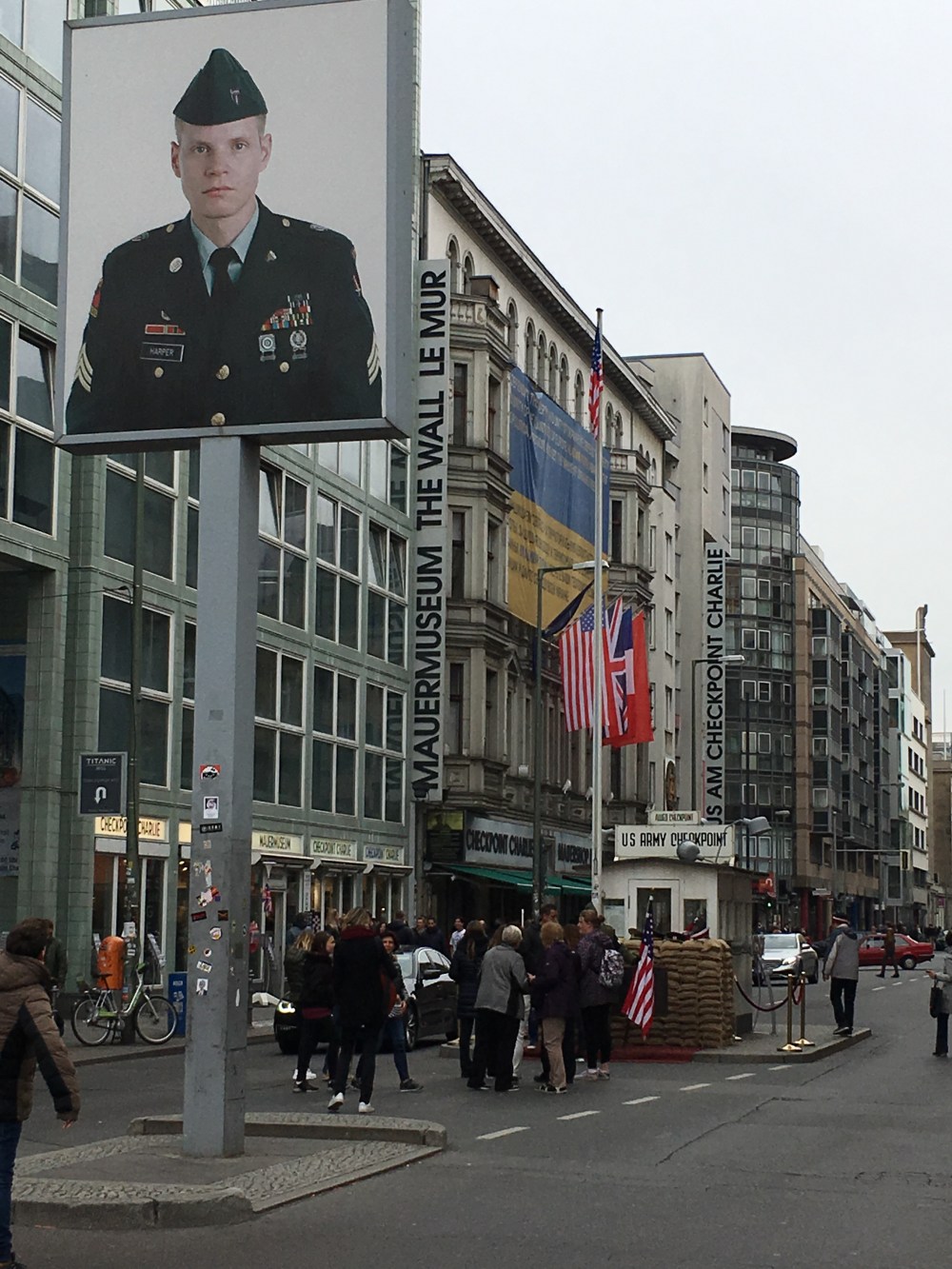
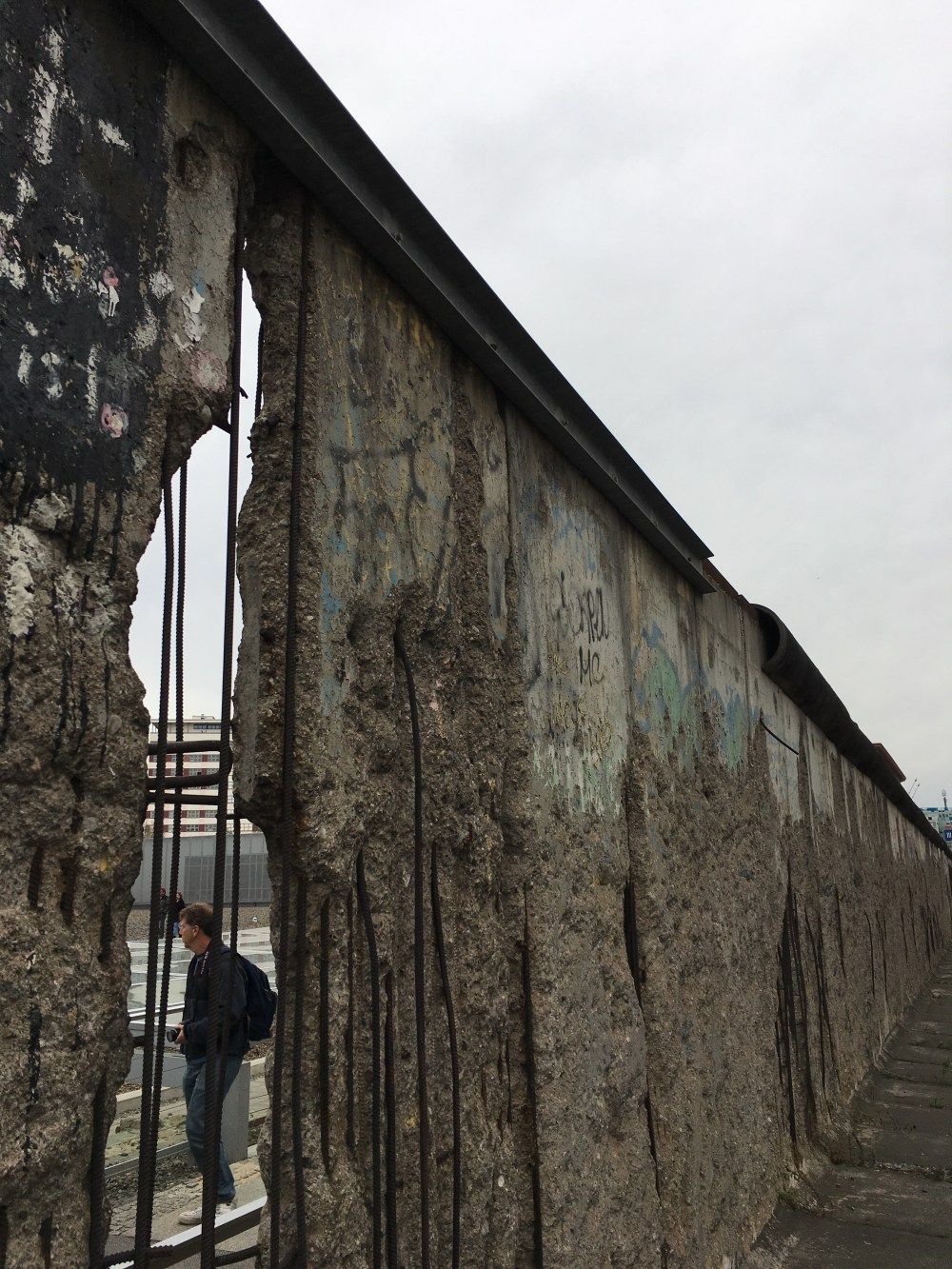
West Berlin was a 185 square mile island of capitalism surrounded by East Germany. Between establishment of East Germany in 1949 and construction of the Berlin Wall in 1961, an estimated three million East Germans fled to freedom. To staunch their population loss, East Germany erected the 96 mile long Berlin Wall (they called it the “Anti-Fascist Protective Rampart”) almost overnight on August 13, 1961. But the Berlin Wall was actually two walls. The Outer was a 12 foot high concrete barrier topped with a rounded, pipe like surface to discourage grappling hooks (Pic 7). The inner Wall was lower profile. Sandwiched between them was a no-man’s-land (“death strip”) between 30 and 160 feet wide. There were eight points you could legally cross between, the most famous being CheckPoint Charlie (Pic 6). In general, Westerners could temporarily enter the East, but not vice versa.
Even after the Wall went up, people didn’t stop trying to escape. During the Wall’s 28 years, there were about 5,000 documented successful escapes – and 565 of those were East German guards! The Berlin Wall came to symbolize the larger Cold War. President John F Kennedy gave a speech of solidarity in West Berlin declaring “Ich bin ein Berliner” – I am a Berliner. A generation later, President Ronald Reagan stood directly in front of the Brandenburg Gate and demanded of his Soviet counterpart, “Mr. Gorbachev, tear down this wall”. Finally, one November night in 1989, the Berlin Wall came down as suddenly as it went up.
So here’s a quick run down on the pics.
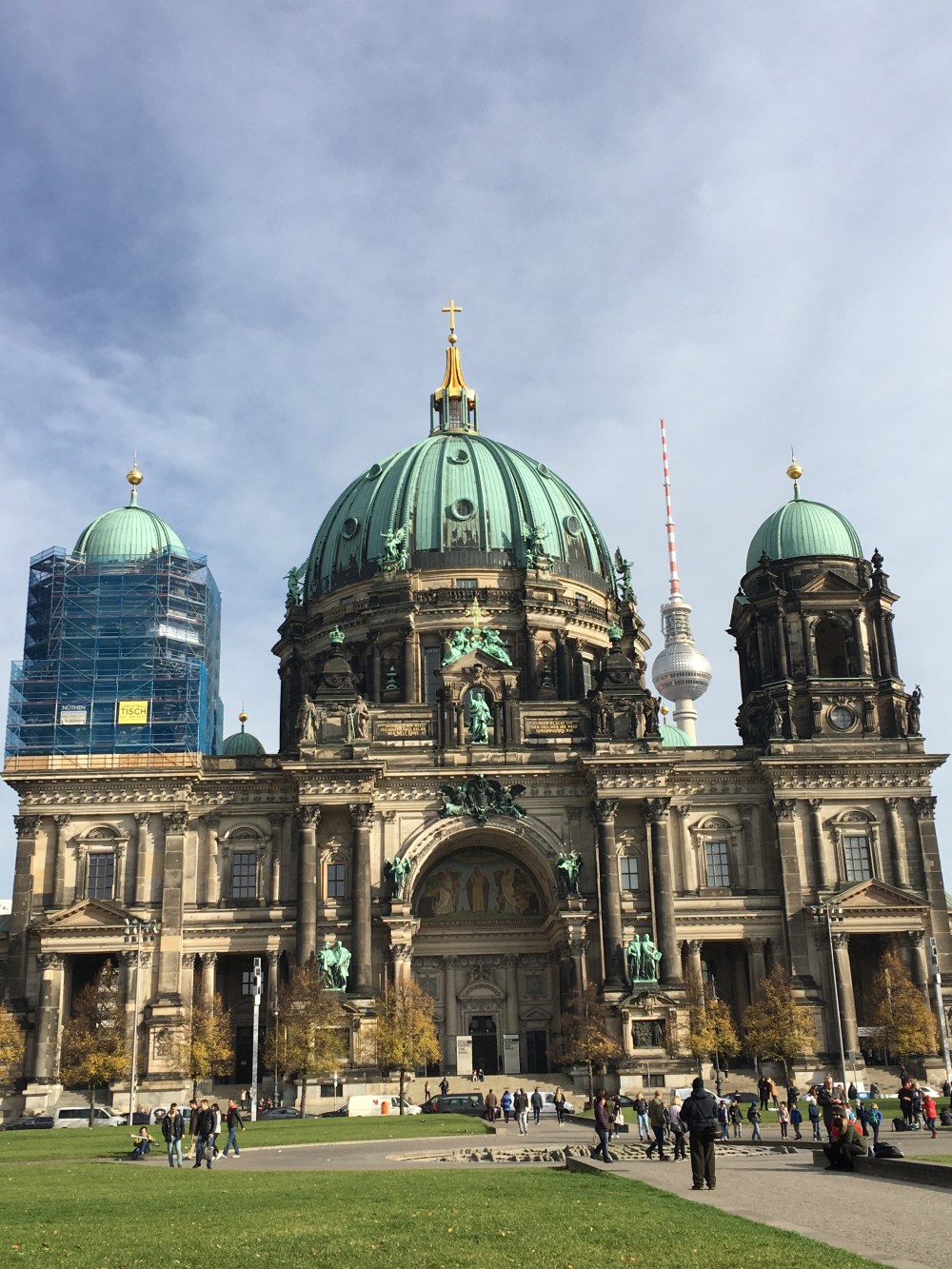
The first one is the towering, green domed, Berlin Cathedral built during the reign of the Prussian Kaiser Wilhelm II. The tall TV Tower you see behind it was built in 1969 by communist East Germany and was meant to show the power of the atheistic state at the very time they were removing the crosses from the church domes and spires. But if you zoom in a little on the tower, you see that when the sun hits it, it creates a huge cross on the mirrored ball. Cynic’s call it “God’s revenge”.
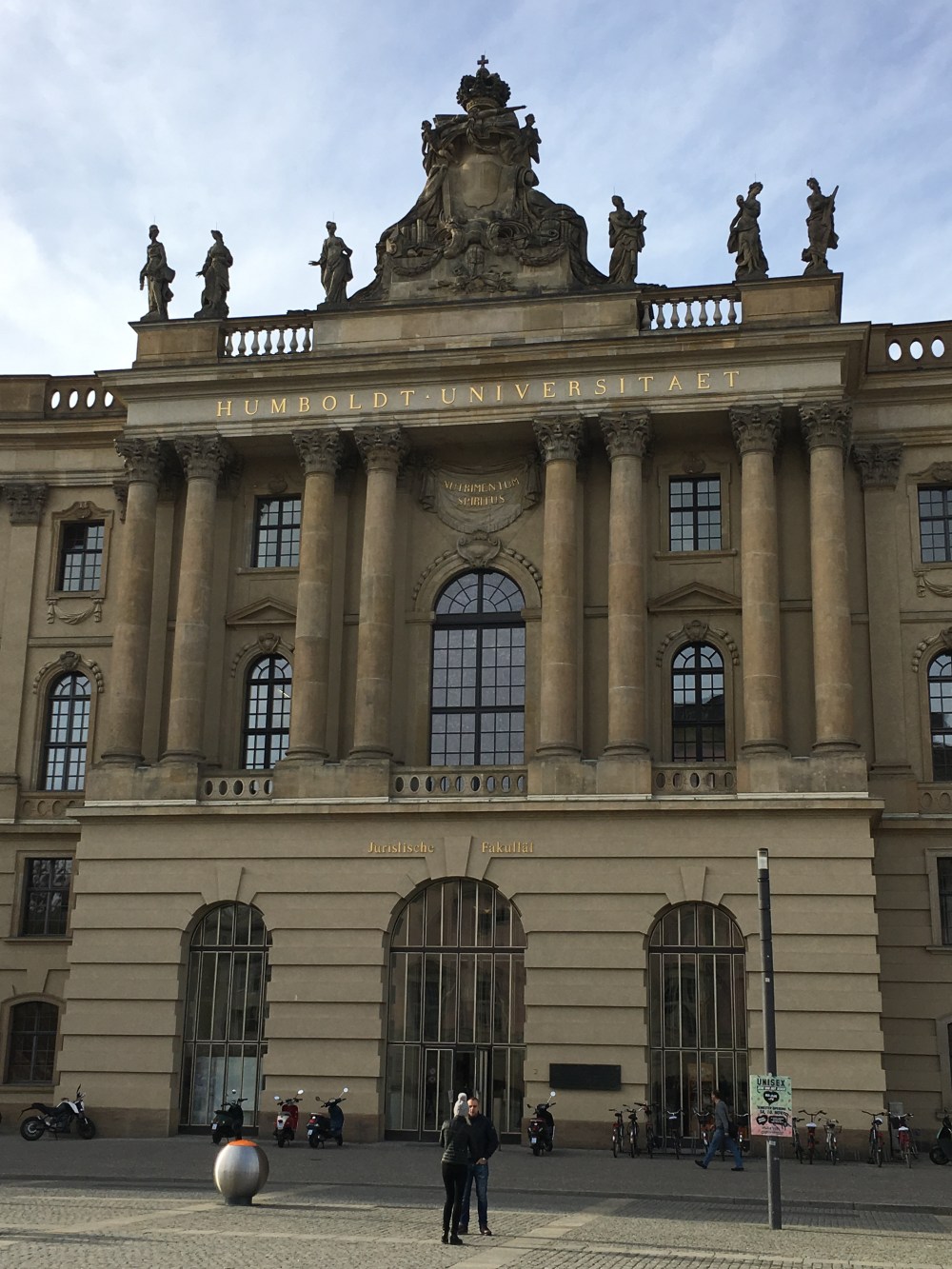
Next is Humboldt University, one of the best in Europe. But on this square in 1933, staff and students built a bonfire and burned 20,000 newly forbidden books authorized by the likes of Einstein, Hemingway, Freud, and T.S. Eliot. Overseeing it all was the Nazi propaganda minister, Joseph Goebbels.
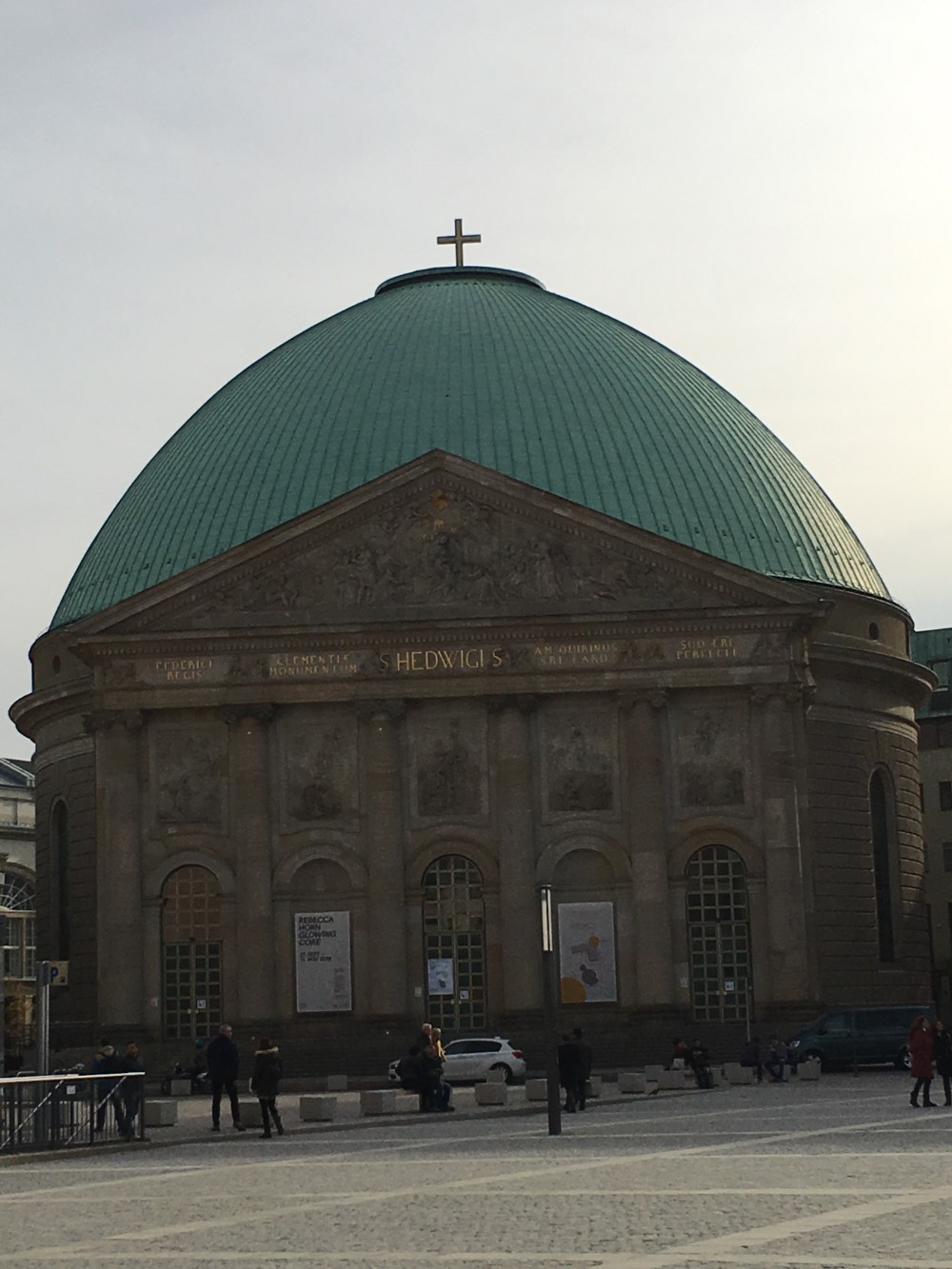
Next is the green domed St Hedwig’s Church (nicknamed the “Upside-Down Teacup”). It stands as a symbol of Frederick the Great’s religious and cultural tolerance. The pragmatic king wanted to encourage the integration of the Catholic Silesians into Protestant Prussia. But his progressivism had its limits: St Hedwig’s is set back from the street, suggesting inferiority to the Protestant churches.
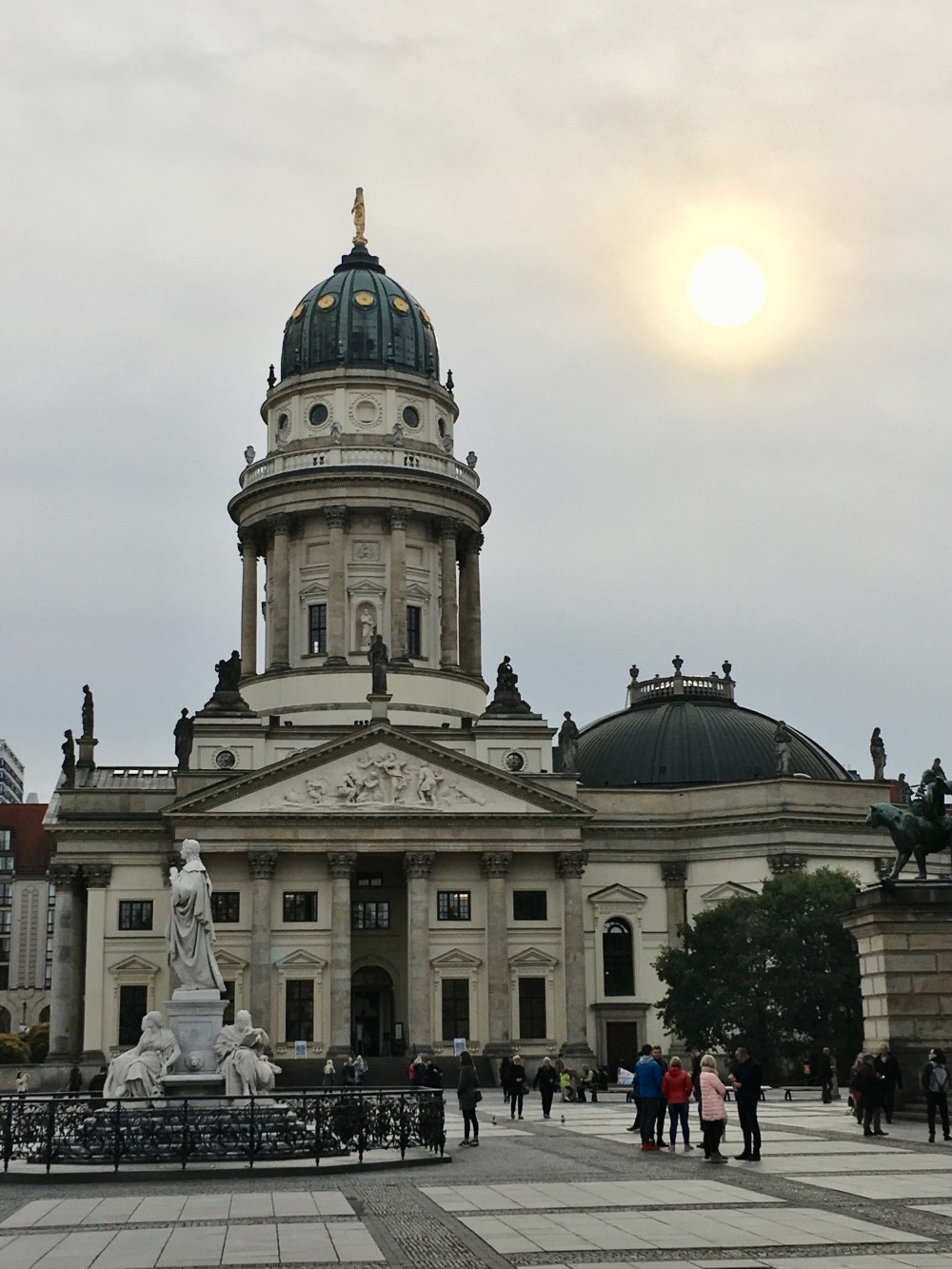
Next is the German Cathedral which was totally bombed in the war and rebuilt in the 1980’s.
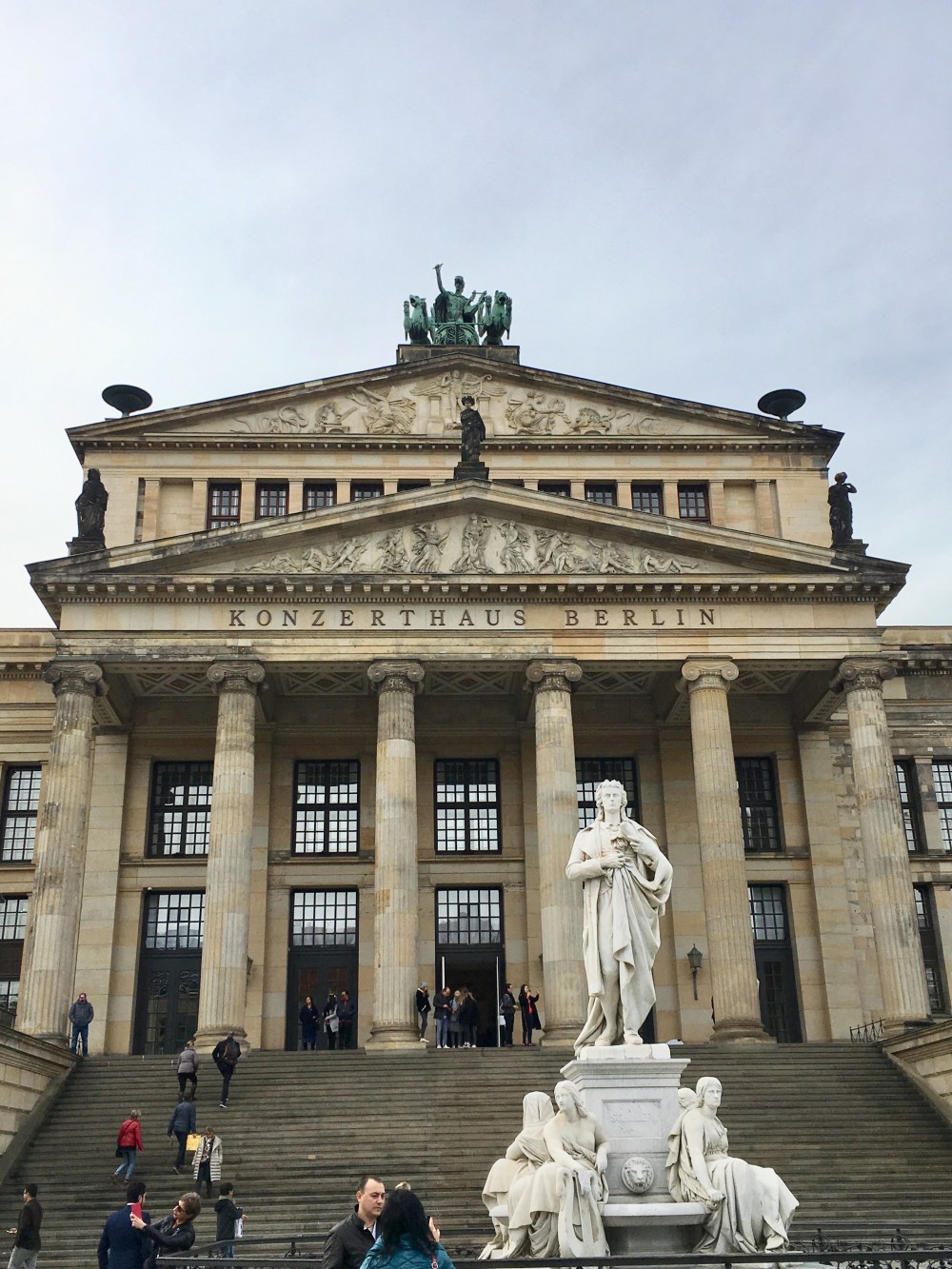
Next up is the Konzerthaus (Concert Hall) Berlin and houses the German orchestra. Built as a theater from 1818 to 1821 under the name of the Schauspielhaus Berlin, its usage changed to a concert hall after World War II and its name changed to its present one in 1994.
The next is a reconstructed guard station of “CheckPoint Charlie”. By the way, the name “Charlie” was given because it was the third checkpoint in a series (Alpha, Bravo, Charlie). The picture of the American soldier is looking back into the East Berlin side.
Next is a section of the Berlin Wall where you can see the rounded pipe like cover on part of the top.
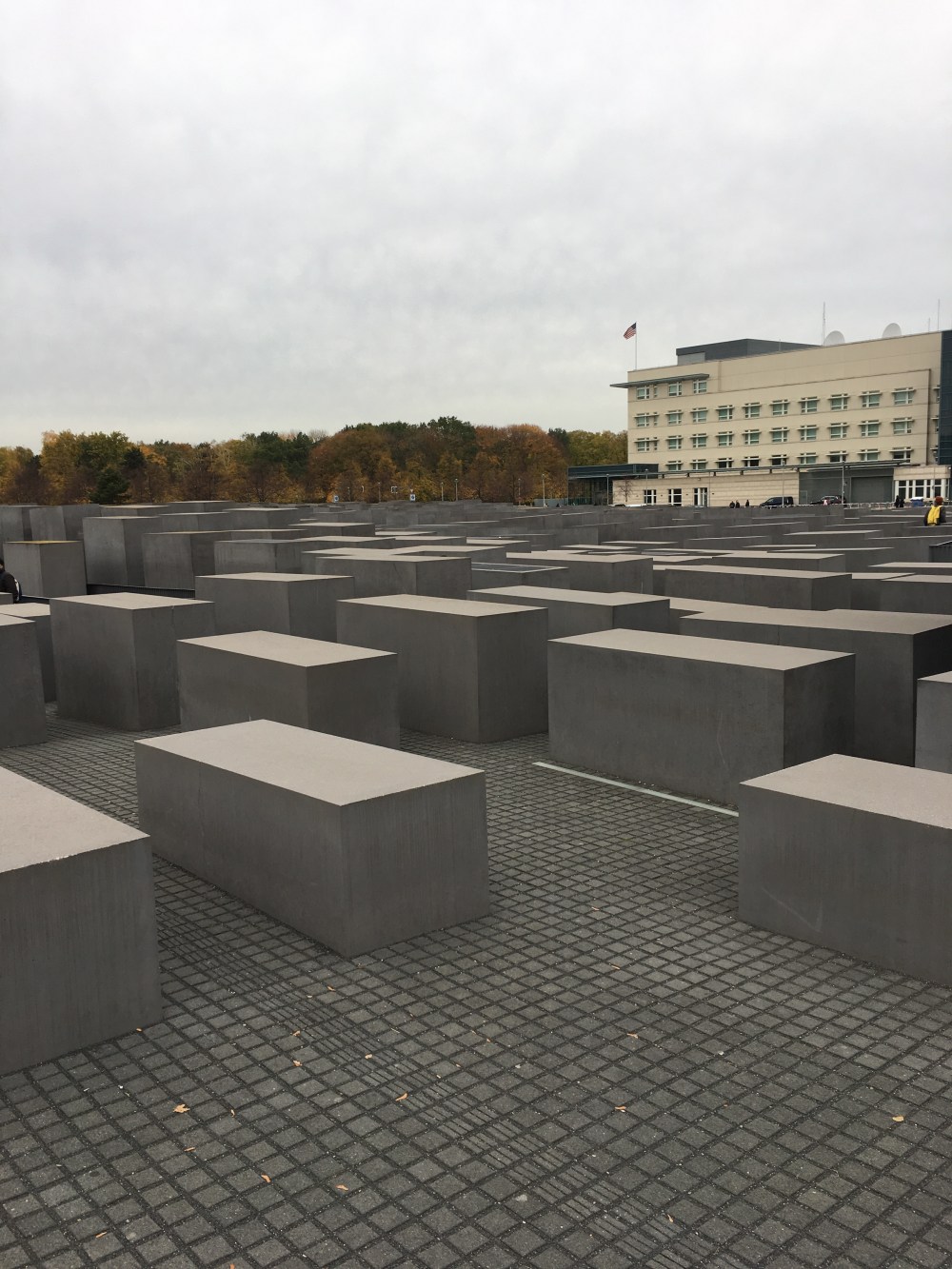
And last is the sadly named “Memorial to the Murdered Jews of Europe”. It consists of 2,711 (no significance to the number) coffin-shaped pillars covering an entire city block. It remembers the six million Jews who were killed by the Nazis during World War II. Completed in 2005, this was the first formal, German-government-sponsored Holocaust Memorial. Using the word “Murdered” in the title was intentional, and a big deal. Germany, as a nation, was admitting to a crime. Today’s Germans – even several generations removed from the atrocities of their ancestors – still live by the ethic: “Never forget”.
So that’s all for today. Hope everyone’s Thursday is treating them well.
Jeff

 The Wandering Italian